

 English
 Deutsch
 italiano
 中文簡體
中文簡體
Author: Admin Date: 2025-12-22
How Does a Three-phase Induction Motor Work and What Are Its Key Components?
Content
A three-phase induction motor is one of the most widely used electric motors in industrial and commercial applications. Its simple design, robustness, efficiency, and reliability make it a preferred choice for pumps, compressors, conveyors, and many other mechanical systems. Understanding its working principle and key components is essential for engineers, technicians, and maintenance personnel.
Three-phase induction motors operate on the principle of electromagnetic induction, where a rotating magnetic field in the stator induces current in the rotor. This current generates torque, causing the rotor to turn and drive mechanical loads.
Working Principle of Three-phase Induction Motors
The core principle of a three-phase induction motor is based on Faraday’s law of electromagnetic induction. When a three-phase alternating current flows through the stator windings, it produces a rotating magnetic field. This rotating field induces an electromotive force (EMF) in the rotor conductors, generating rotor current. The interaction between the stator’s rotating field and rotor current produces torque, causing the rotor to rotate in the same direction as the stator’s magnetic field.
Synchronous Speed and Slip
The synchronous speed (Ns) of a three-phase induction motor is the speed at which the stator magnetic field rotates, determined by the supply frequency (f) and the number of poles (p) using the formula: Ns = 120 × f / p. The rotor speed (Nr) is slightly less than the synchronous speed, creating a relative motion between the rotor and the magnetic field. This difference is called slip (S), expressed as a percentage: S = (Ns - Nr) / Ns × 100%. Slip is essential for induction motor operation, as it allows EMF induction in the rotor.
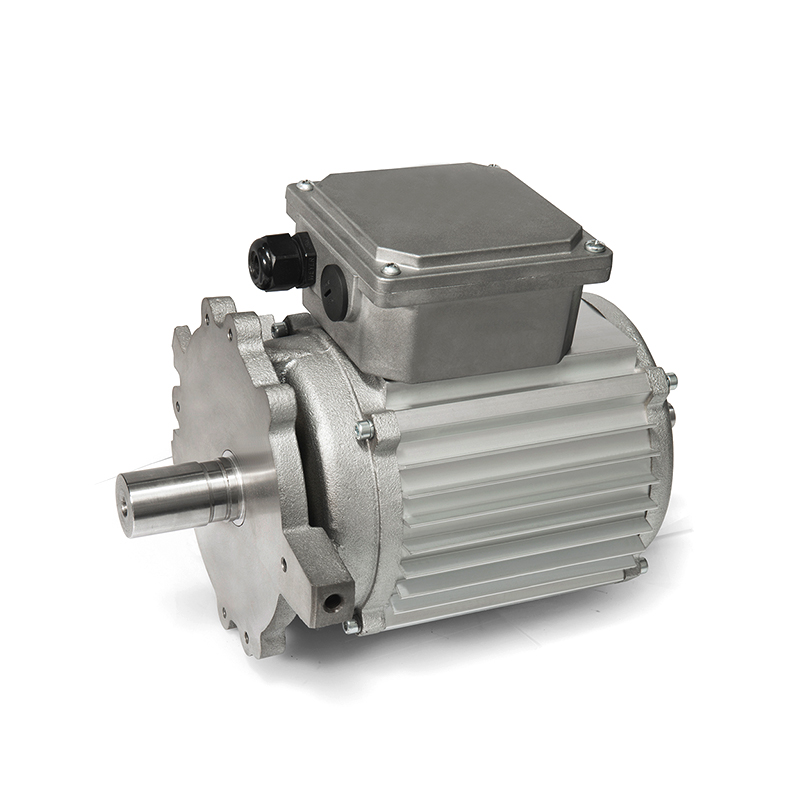
Key Components of a Three-phase Induction Motor
A three-phase induction motor consists of several main components that contribute to its efficient operation. These include the stator, rotor, bearings, end shields, and cooling systems.
Stator
The stator is the stationary part of the motor, containing laminated steel cores and three-phase windings. These windings carry the AC supply and generate the rotating magnetic field. The stator core is laminated to minimize eddy current losses and improve efficiency.
Rotor
The rotor is the rotating part of the motor, placed inside the stator. There are two main types of rotors:
- Squirrel Cage Rotor: Consists of aluminum or copper bars short-circuited at both ends, forming a cage-like structure. It is simple, robust, and widely used in industrial motors.
- Wound Rotor: Contains three-phase windings connected to external resistors via slip rings. It is used in applications requiring high starting torque and speed control.
Bearings and End Shields
Bearings support the rotor, reducing friction and enabling smooth rotation. End shields house the bearings and provide mechanical protection. High-quality bearings ensure longevity and reduce maintenance requirements.
Cooling System
Three-phase induction motors generate heat during operation. Cooling methods, such as external fans or ventilation ducts, help maintain optimal operating temperatures, prevent insulation degradation, and prolong motor life.
Types of Three-phase Induction Motors
Three-phase induction motors can be classified based on rotor construction and mounting configuration.
Based on Rotor Construction
- Squirrel Cage Induction Motor: Easy to maintain and suitable for most industrial applications.
- Wound Rotor Induction Motor: Allows external resistance for starting torque control and speed variation.
Based on Mounting Configuration
- Horizontal Motor: Most common type used in general industrial applications.
- Vertical Motor: Suitable for applications requiring vertical shaft alignment, such as pumps.
Applications of Three-phase Induction Motors
Three-phase induction motors are widely used in industries due to their efficiency, reliability, and simplicity. Common applications include:
- Pumps and Compressors: For water treatment, oil and gas, and HVAC systems.
- Conveyors and Material Handling Systems: Ensuring continuous and efficient operation.
- Industrial Machinery: Lathes, milling machines, and automated production lines.
- Fans and Blowers: In ventilation and cooling systems.
Maintenance Tips for Three-phase Induction Motors
Regular maintenance ensures the longevity and reliability of three-phase induction motors. Key practices include:
- Check bearings periodically and lubricate as recommended by the manufacturer.
- Inspect windings and insulation for signs of wear or overheating.
- Ensure proper ventilation and remove dust or debris from cooling paths.
- Monitor voltage, current, and temperature during operation to detect abnormalities early.
Conclusion
The three-phase induction motor is a cornerstone of modern industrial machinery, combining efficiency, durability, and simplicity. Understanding its working principle, key components, and proper maintenance practices enables engineers and technicians to optimize performance, reduce downtime, and ensure long-term reliability in various applications.

-
Feedback
Related products




Hotline:0086-15869193920
Time:0:00 - 24:00
